Books creator: how to write and publish easily
Discover how to become a successful books creator with the help of artificial intelligence: from first idea to publication, a complete guide to transform your dream into reality.
Stay updated with our newsletter
Receive exclusive tips, resources, and updates to turn your ideas into bestselling books.
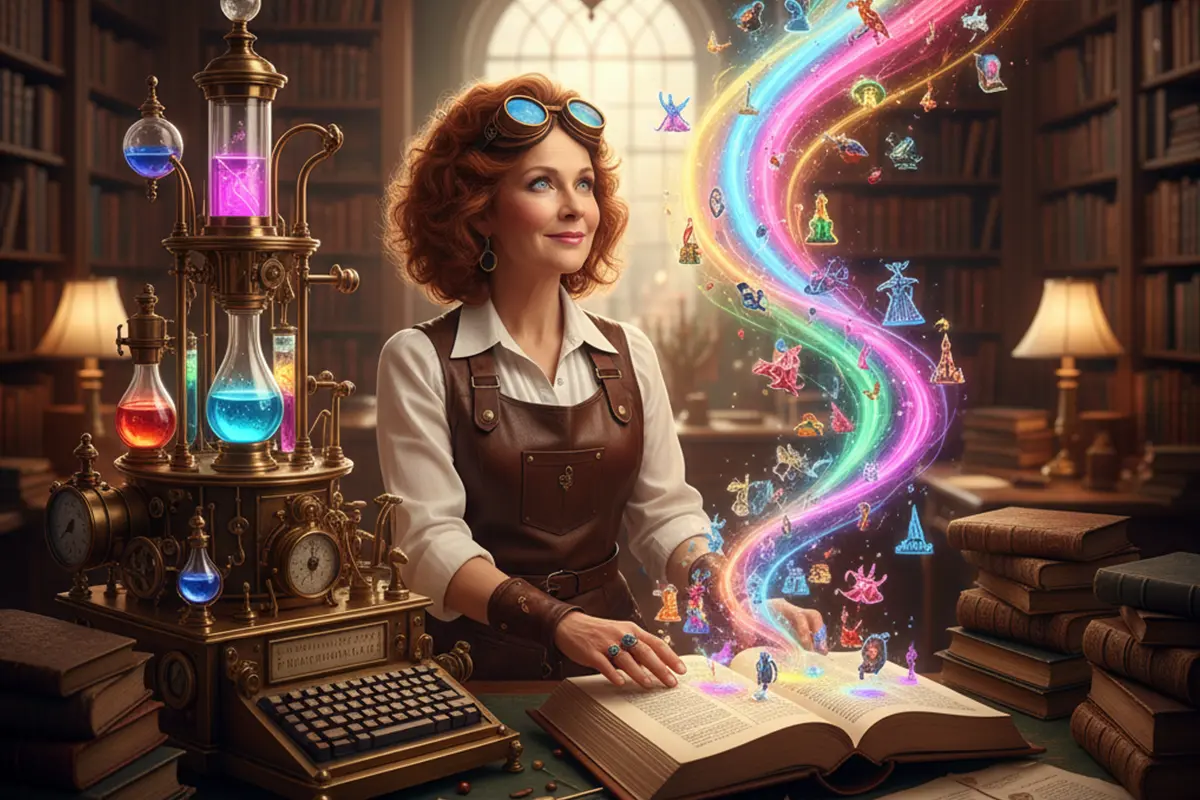
Sarah had always dreamed of becoming a books creator. Every evening, sitting on her couch with a notebook on her lap, she would jot down ideas, characters, and fragments of dialogue. But every time she tried to transform those scattered notes into a complete manuscript, she found herself stuck: how to organize ideas? How to maintain consistency across chapters? How to find time between work and family?
One day, she discovered she could use an ebook creator powered by artificial intelligence to help her not only write faster but also structure her ideas better, maintain narrative consistency, and overcome writer's block. Within a few weeks, Sarah completed her first novel and successfully published it. Her story proves that today, anyone with the right resources and determination can become a professional books creator.
In this comprehensive guide, we'll explore everything you need to become a successful books creator, from the initial ideation stages through to publication and promotion of your work.
Table of Contents
- What is a books creator in the digital age
- Benefits of being an independent books creator
- How artificial intelligence revolutionizes the creative process
- Essential tools for ebook creation with AI
- Complete process: from idea to published book
- Advanced techniques to optimize your writing
- Publishing and distributing your book
- Marketing and promotion for books creators
- Common mistakes to avoid
- The future of books creators
- Frequently asked questions
What is a books creator in the digital age
A modern books creator is someone who doesn't just write content but manages the entire book production process: from ideation to writing, from revision to publication, all the way to promotion and distribution. The advent of technology and artificial intelligence has democratized this role, making it accessible to anyone to publish professional-quality works without necessarily going through traditional publishing houses.
Today, a books creator has access to powerful tools that facilitate every phase of the creative process. It's no longer necessary to be an expert in editing, graphic design, or book marketing: specialized platforms exist that support every aspect of book production. This radical change has opened doors for thousands of new authors who can finally give voice to their stories and share their knowledge with the world.
The contemporary books creator figure combines artistic creativity with technological competencies. They must balance narrative inspiration with the ability to use software, publishing platforms, and digital marketing tools. This evolution has transformed writing from a solitary and isolated activity into a dynamic and interconnected process, where technology and creativity merge to create increasingly innovative and accessible works.
Benefits of being an independent books creator
Becoming an independent books creator offers numerous advantages over the traditional publishing route. The first and most obvious is total creative control: you decide content, style, cover, price, and distribution strategy. You don't have to submit to editors' demands or publishing houses' commercial logic, keeping your original artistic vision intact.
From an economic perspective, self-publishing allows you to retain most of the earnings generated by sales. While a traditional author receives royalties ranging from 5% to 15% of the cover price, an independent creator can earn up to 70% of the sale price on platforms like Amazon Kindle Direct Publishing. This means that even with modest sales volumes, it's possible to generate significant income.
Another crucial advantage is publication speed. While the traditional editorial process can take 12 to 24 months from contract signing to actual publication, an independent books creator can complete the entire cycle in a few weeks or months. This allows you to respond quickly to market trends, publish works on current topics, and maintain a consistent publication rhythm that favors building a loyal audience.
Flexibility is a further benefit: you can experiment with different formats, test different prices, update content in real-time, and even withdraw works that don't meet your standards. This operational freedom allows you to learn continuously from the market and optimize your strategies based on concrete data rather than editorial assumptions.
How artificial intelligence revolutionizes the creative process
Artificial intelligence has radically transformed how books creators approach the writing process. When we talk about using an ebook creator powered by AI, we don't mean completely delegating creativity to a machine, but rather using intelligent tools that amplify human capabilities, accelerate repetitive phases, and offer support in areas where the author might struggle.
Modern AI tools can assist in the brainstorming phase, generating plot ideas, suggesting interesting narrative developments, or proposing character names. This initial phase, often the most difficult for many aspiring authors, becomes much smoother when you have access to a virtual creative partner that can provide insights and alternative perspectives.
During actual writing, artificial intelligence can help maintain narrative consistency, suggest stylistic variations, improve text flow, and even identify plot or character inconsistencies. These systems analyze your manuscript's context and offer contextualized suggestions that respect the tone and style you've established, functioning as an always-available editor.
Revision and editing represent another area where AI excels. Beyond basic grammar and spelling corrections, advanced tools can analyze text readability, identify overly complex or redundant passages, suggest appropriate synonyms, and even assess the emotional impact of certain passages. This level of deep analysis was previously available only through expensive professional editors.
Finally, artificial intelligence also supports post-writing phases, helping generate compelling descriptions for sales pages, optimize keywords for online search, create promotional materials, and even translate works into different languages, vastly expanding the potential audience.
Essential tools for ebook creation with AI
For those wanting to become an effective books creator leveraging artificial intelligence capabilities, several fundamental tool categories exist covering every phase of the creative process.
Integrated writing platforms
Platforms like Books Maker represent complete solutions that integrate artificial intelligence into every phase of book creation. These systems offer support for structure planning, content generation, stylistic revision, and formatting for publication. Integrating all these tools in a single environment greatly simplifies workflow and reduces the need to constantly switch between different applications.
AI writing assistants
Tools specialized in writing assistance use advanced language models to offer contextual suggestions, sentence and paragraph completions, and stylistic alternatives. These assistants learn from your writing style and progressively adapt to your preferences, becoming increasingly effective collaborators as you use them.
Editing and revision software
AI-based editing systems go beyond traditional spell-checkers, offering in-depth analysis of grammar, style, tone, narrative rhythm, and consistency. Some advanced tools can identify clichés, suggest ways to strengthen narrative point of view, or highlight passages where pacing slows excessively.
Auxiliary content generators
These tools help create complementary elements to the main book: back cover summaries, author biographies, promotional materials, social media posts, and even scripts for presentation videos. The ability to quickly generate quality marketing content represents a significant advantage in the promotion phase.
Analysis and optimization tools
Platforms that analyze your manuscript to identify SEO improvement opportunities, suggest relevant keywords to increase online visibility, and evaluate the competitiveness of your title and subtitle in the reference market. These tools transform complex data into concrete and actionable recommendations.
Complete process: from idea to published book
The path to becoming a successful books creator follows well-defined phases that, when executed correctly, lead to a publishable work of professional quality.
Phase 1: Ideation and research
Everything starts with an idea, but not all ideas are equally valid for the publishing market. The preliminary research phase is crucial: you must verify whether an audience interested in your topic exists, analyze similar books already published to identify differentiation opportunities, and clearly define the unique value your work offers readers.
Using AI tools, you can accelerate market research, analyze editorial trends, identify underserved niches, and validate the commercial potential of your idea before investing months in writing. This data-driven approach significantly reduces the risk of dedicating energy to projects with poor success prospects.
Phase 2: Planning and structure
Once the idea is validated, it's time to create a solid structure. This means defining the overall book architecture: chapters, sections, main narrative arcs (if fiction), or logical sequence of topics (if non-fiction). AI tools can suggest effective structures based on genre and book objective, helping you organize content in a logical and engaging way.
At this stage, many books creators create detailed outlines with brief summaries of each chapter, notes on main characters, event timelines, and recurring themes. This preparation makes the writing phase much smoother and drastically reduces the risk of creative blocks or narrative inconsistencies.
Phase 3: Writing the first draft
With a solid structure in hand, writing the first draft becomes a systematic process rather than a titanic undertaking. The goal at this stage isn't perfection, but completing the entire narrative from beginning to end. Many experienced authors advise writing without stopping too much to revise, letting ideas flow freely.
AI tools can support this phase by offering suggestions when you're stuck, proposing alternatives to overcome dead ends, and tracking narrative elements to ensure consistency. Some authors use AI to generate first drafts of less crucial sections, which they then thoroughly review and personalize.
Phase 4: Revision and refinement
Once the first draft is completed, the revision phase begins, which usually requires multiple iterations. The first revision focuses on macro structure: does the plot work? Are the characters consistent? Does the central message emerge clearly? Subsequent revisions address increasingly detailed aspects: writing quality, word choice, pacing, dialogue.
Artificial intelligence excels in this phase, automatically identifying problematic areas, suggesting stylistic improvements, and offering objective analysis of text quality. This doesn't replace human revision but makes it much more efficient and effective.
Phase 5: Formatting and design
A book isn't just text: visual presentation enormously influences reading experience and purchase decisions. Professional formatting ensures text is readable and pleasant across all devices, while eye-catching cover design attracts attention in a crowded market.
Many modern tools offer professional templates and automations that simplify these technical aspects, allowing books creators to focus on content rather than formatting technicalities.
Phase 6: Publication and distribution
The final phase involves choosing publishing platforms, uploading files, configuring metadata (title, description, categories, keywords), setting price, and establishing distribution territories. Platforms like Amazon KDP, Google Play Books, Apple Books, and others make this process relatively simple even for those without technical experience.
The crucial decision regards distribution strategy: exclusive publication on one platform to access special promotional programs, or wide distribution across multiple channels to maximize visibility? Each approach has advantages and disadvantages depending on your specific goals.
Advanced techniques to optimize your writing
For those aspiring to become a professional books creator, mastering advanced writing techniques can make the difference between a mediocre work and a bestseller.
Developing a distinctive narrative voice
Narrative voice is what makes your book unique and recognizable. Developing it requires conscious practice and experimentation. Read authors you admire and analyze what makes their style characteristic, then experiment by adapting those techniques to your personal sensibility. AI tools can help you maintain stylistic consistency throughout the manuscript, signaling when you deviate from the voice you've established.
Managing narrative pacing
Pacing determines how quickly or slowly the story develops. Action scenes require short sentences, concise paragraphs, dynamic language. Reflective moments benefit from a more meditative approach, with detailed descriptions and more complex sentences. Alternating these rhythms keeps the reader engaged and avoids monotony.
Creating memorable characters
In fiction, well-developed characters are fundamental to success. Each main character should have clear motivations, internal and external conflicts, and a believable transformation arc. Use character sheets to track background, distinctive traits, relationships, goals, and fears. AI can help you identify inconsistencies in character behavior or suggest interesting developments based on established psychology.
Building authentic dialogue
Effective dialogue reveals character, advances the plot, and creates tension. It should sound natural without being a literal transcription of real speech, which is often repetitive and unfocused. Read dialogue aloud to verify it sounds authentic, and ensure each character has a distinctive way of speaking.
Strategic use of descriptions
Descriptions create environment and atmosphere, but too many slow the pace. The goal is to provide sufficient detail for the reader to visualize the scene, leaving room for imagination. Choose meaningful details that add emotional or symbolic value rather than exhaustive catalogs of every element present.
Publishing and distributing your book
Once the manuscript is completed and refined, the books creator must face strategic decisions regarding publication and distribution.
Choosing publication mode
The main options are self-publishing and traditional publishing. Self-publishing offers total control, higher margins, and speed, but requires personal investment in editing, design, and marketing. Traditional publishing provides professional support, established distribution, and credibility, but involves rights assignment, lower royalties, and long timelines.
For those choosing self-publishing, platforms like Amazon Kindle Direct Publishing (KDP), Google Play Books, Apple Books, Kobo Writing Life, and Draft2Digital offer access to global markets without upfront costs. These platforms handle print-on-demand, digital distribution, payments, and sales reporting.
Publication formats
Modern books creators typically publish in multiple formats to maximize potential audience: ebook (EPUB, MOBI, PDF), paperback (paperback, hardcover via print-on-demand), and audiobook. Each format reaches different audience segments with specific consumption preferences.
Ebooks represent the most economical format to produce and offer the highest margins. Paperback maintains prestige and allows sales in contexts where readers prefer physical copies. Audiobooks are the fastest-growing segment, particularly popular among professionals who consume content during commutes or daily activities.
Metadata optimization
Your book's metadata - title, subtitle, description, keywords, categories - determines its search visibility and competitiveness. An effective title immediately communicates the main benefit, is easy to remember, and contains keywords relevant to user searches.
The description must capture attention in the first two lines, clearly present the book's value, create curiosity, and include a call-to-action. Keywords should cover specific terms your ideal readers would use to search for content like yours.
Pricing strategies
Price influences both sales and total earnings. A price too low can signal poor quality, while one too high can discourage purchases from readers who don't know you yet. The common strategy involves a promotional launch price to generate initial reviews and visibility, followed by gradual increases as the book gains credibility.
Marketing and promotion for books creators
Even the best book won't sell if no one knows about its existence. Successful books creators dedicate significant time to marketing and building an author platform.
Building an author platform
Even before publishing, start building an online presence. Create a professional website, social profiles targeted to your audience, and an email list. These digital assets allow you to communicate directly with readers, announce new publications, and create a community around your work.
Regularly share valuable content related to your books' themes: articles, videos, podcasts. This positioning as an expert in your field attracts interested readers and builds trust long before you ask them to purchase your book.
Effective launch strategies
The launch is a crucial moment that determines the book's initial momentum. An effective strategy includes: pre-launch with teaser campaign to build anticipation, team of beta readers providing initial reviews, virtual or physical launch events, time-limited promotions to incentivize immediate purchases.
Coordinating all these activities creates a visibility spike that can push the book into rankings, generating further organic exposure through platform algorithms.
Generating and managing reviews
Reviews are the social currency of the digital publishing market. Books with many positive reviews sell significantly more than those without. Explicitly ask satisfied readers to leave reviews, facilitate the process by providing direct links, and publicly thank those who dedicate time to writing feedback.
Respond professionally even to negative reviews, demonstrating that you appreciate all feedback and are committed to continuously improving as a books creator.
Using paid advertising
Once you've validated that your book converts readers into buyers, investing in advertising can significantly accelerate sales. Amazon Ads, Facebook Ads, BookBub Ads, and other platforms allow precise targeting toward readers interested in your specific genre.
Start with limited budgets, test different creatives and audiences, carefully measure return on investment, and gradually scale campaigns that demonstrate profitability.
Common mistakes to avoid
Even with the best tools, books creators can make mistakes that compromise their works' success.
Publishing too early
The enthusiasm of seeing one's book published leads many authors to skip crucial revision and editing phases. A book full of grammatical errors, narrative inconsistencies, or formatting problems will receive negative reviews that permanently damage its reputation. Better to dedicate additional weeks to refinement than publish a work of inferior quality.
Ignoring the market
Writing exclusively for yourself without considering what the public seeks leads to books that don't find readers. This doesn't mean abandoning your creative vision, but rather finding the intersection between what you want to say and what people want to read. Market research doesn't limit creativity, it informs it.
Underestimating cover importance
Readers absolutely judge books by their covers. An amateurish-looking cover immediately communicates poor quality, even if the content is excellent. Investing in professional design or using high-quality templates represents one of the most important investments a books creator can make.
Neglecting marketing
Many authors believe a quality book will sell itself. In today's reality, where millions of titles compete for attention, proactive marketing is essential. Dedicating time and energy to promotion is as important as dedicating it to writing itself.
Excessive AI dependence
While artificial intelligence is a powerful tool for using an ebook creator, relying completely on it without personal creative contribution produces generic works lacking soul. AI should amplify your unique voice, not replace it. A book's value lies in human perspective, personal experience, and authentic emotions that only you can convey.
The future of books creators
The publishing landscape continues to evolve rapidly, opening new opportunities for innovative books creators.
Evolution of AI tools
Artificial intelligence tools will become progressively more sophisticated, offering increasingly personalized and contextual support. Future systems might analyze not just text but deeply understand themes, emotional arcs, character development, and offer strategic suggestions at the narrative level rather than just tactical at the sentence level.
Integration between different tools will become more fluid, creating complete ecosystems where ideation, writing, editing, design, publication, and marketing are interconnected in unified platforms. This will further reduce the technical barriers currently hindering many aspiring authors.
New formats and consumption modes
Traditional books will coexist with innovative formats: interactive fiction where readers influence plot development, multimedia content integrating text, audio, video and graphic elements, personalized reading experiences that adapt to individual preferences.
Virtual and augmented reality could radically transform the reading experience, creating immersive environments where stories unfold around the reader rather than on two-dimensional pages.
Continued democratization
Barriers to entry in the publishing market will continue to decrease. Increasingly accessible and intuitive tools will allow anyone with a story to tell or knowledge to share to become a published books creator, regardless of technical background or financial resources.
This democratization will increase the diversity of voices and perspectives available, enriching the literary landscape with stories from cultures, experiences, and communities previously underrepresented in traditional publishing.
Innovative business models
Beyond direct sales, alternative models will emerge: subscriptions offering unlimited access to curated catalogs, micropayments for single chapters, premium content with exclusive additional materials, crowdfunding to finance ambitious projects before publication.
Books creators will be able to diversify income by combining book sales with consulting, online courses, speaking engagements, related products, and community membership, building true personal publishing enterprises.
Frequently asked questions
How long does it take to become a successful books creator?
The path varies enormously based on goals, dedication, and definition of success. Some authors publish their first book in a few months using AI tools to accelerate the process, while others dedicate years to perfecting their craft. Most professional books creators suggest planning at least 6-12 months to produce a professional-quality work starting from scratch, considering learning, writing, revision, and marketing.
Is it possible to create quality books using only AI tools?
Artificial intelligence tools are powerful allies, but the most successful books arise from the combination of technology and human creativity. AI excels at technical assistance, stylistic optimization, and accelerating repetitive processes, but creative vision, personal experience, unique perspective, and authentic emotions can only come from the human author. Best results are obtained when AI amplifies human capabilities rather than replacing them.
How much can you earn as an independent books creator?
Income varies drastically based on genre, quality, marketing, publication volume, and time invested. Some authors earn a few dozen dollars monthly, while others build six-figure careers. The key is treating book creation as a business activity: publish regularly, build a catalog, invest in marketing, optimize based on data. Many successful authors report that significant earnings arrive after publishing multiple titles and building a loyal audience.
Are specific technical skills needed to create books with AI?
No, most modern tools are designed to be accessible even to those without technical background. Platforms like Books Maker offer intuitive interfaces that guide users through every phase. Fundamental skills concern writing and narration more than technology. However, some familiarity with computers, internet, and basic software certainly facilitates the process.
How do you choose the right genre to focus on?
Genre choice should balance three factors: personal passion (you write better about topics you're passionate about), competence (your experience or knowledge provides unique value), and market opportunity (sufficient reader demand). Research which genres sell well, but don't just chase trends. The most satisfied books creators work at the intersection between what they love, what they know, and what the market requires.
What's the ideal length for a book?
It depends on genre and format. Ebooks can be shorter: 20,000-40,000 words for novellas, 50,000-80,000 for novels, 30,000-50,000 for focused non-fiction. Paperbacks benefit from greater lengths to justify physical price: 70,000-100,000 words for mainstream fiction, 40,000-60,000 for practical non-fiction. Quality and value density are more important than absolute length.
How are copyrights managed with self-publishing?
With self-publishing, you retain all rights to your work. Distribution platforms receive non-exclusive licenses to sell your book, but you remain the owner. You can publish on platforms you prefer simultaneously (wide distribution) or grant temporary exclusivity to one platform in exchange for promotional benefits (for example, Amazon's KDP Select). Carefully read each platform's terms of service to understand exactly what you're granting.
About Books Maker: Our team is made up of AI professionals. Together with expert writers and authors, we created booksmaker.ai to help our users achieve their publishing dreams by leveraging the power of Artificial Intelligence tools for every stage of the process, from idea to book creation.
Related articles
- How AI is Revolutionizing Book Writing
- Creative Writing Techniques Enhanced by AI
- How to Create a Digital Book: Complete Guide
- AI Book Maker: Guide to Creating Books with AI
📌 Have more questions? Check out our complete FAQ on how to create books with Books Maker to find all the answers about features, pricing, publishing, and more.
Share this article
Start creating your book with AI
Join thousands of authors who are already using Booksmaker.ai to turn their ideas into published books.
Start for free